
Writing Sample
Curriculum
-
The tools and materials available to students go far beyond the physical. The welcoming, warm, and colorful environment aids students just the same.
-
One particular student was observed to get a better understanding of her utilization of the Studio Habits of Mind and developmental stage.
-
I observed theoretical concepts present in the individual student, including where she falls on different developmental scales.
-
My learning throughout the course was exemplified in real time by the observation on the students over time.
In the Classroom
Educational Environment
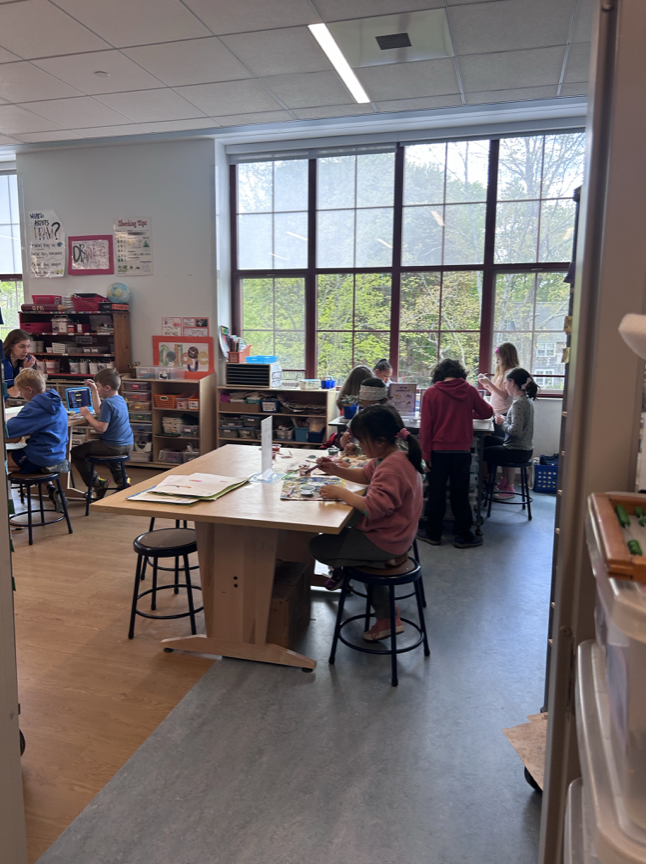
Grades kindergarten through sixth grade take place on a rotating basis in the classroom. The students are welcomed into a bright and colorful environment filled with a plethora of art materials and mediums at their disposal. The beauty of the room lies in the accessibility to the students. The room is well organized and labelled with plenty of direction for students to find materials independently. The environment is set up with multiple visual tutorials on how to keep and use certain materials around the art room without the need of teacher assistance to facilitate independence.
Students have clear view of a Smart Board with the days directions always clearly listed on it. The board is a great tool for students to see what materials are considered “open” and useable for the day. If a material is open, students can access it freely. The classroom operates with a set of large art tables with a meeting rug at the front of the room under the board for the beginning of class meeting.
Most of the time the only adult in the room is the art teacher, Mrs. Donahue, but assistant teachers will make their way in the room with classes on an as needed basis.
Observation of the Individual
The individual was creating her “care artwork” that was to be completed over time in time for the annual art show. all students in grades kindergarten through sixth grade are required to create such artwork with the parameters that they worked on it more than once, utilizing the 8 Studio Habits of Mind “Engage & Persist”. The teacher is very adamant about persisting on artwork in her class, encouraging students to go back into work that they either loved or hated, and thinking what they can add or change to their artwork. This tactic is meant to mimic the way real artists persist on a piece over time, developing their craft and putting real care into the artwork, hence the name.
The options for the care artwork material are different for every grade level based on the skill builders they practiced this far throughout the year, and what the teacher has decided was an “open” material for them to use during this time. Most grades had access to drawing, painting, collaging, and printmaking, with upper grades having access to kiln fire clay, digital art, and 3d sculpture.
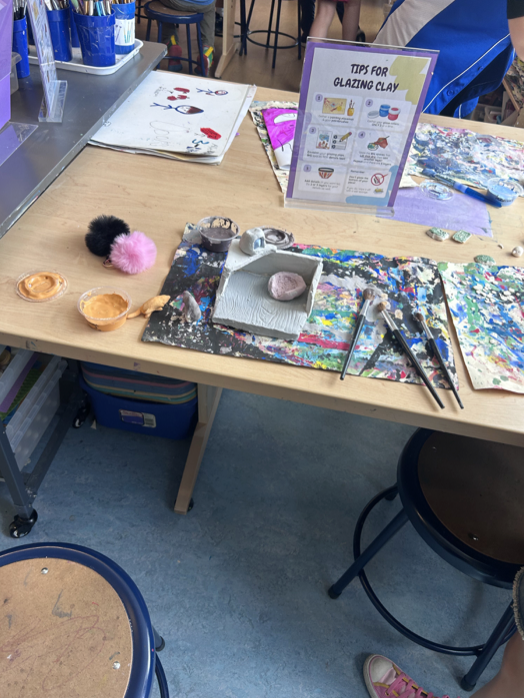
The specific individual I observed, Kate, I have been intrigued by her care artwork over the past 2 months I have been visiting the site. Kate is in third grade, and I remember when she first posed the idea to Mrs. Donahue, and we thought it was a lofty idea to be able to complete in time. She calls it “Cats in the Kitchen”. The piece is a kiln fire clay piece with a variety of moving parts that were required to complete the artwork. Kate had never used kiln fire clay before, but the teacher has prepared them over the years by using temporary sculpting clay such as play-doh and other clay types to practice the act of shaping and different clay making techniques.
She started off with creating a bunch of small cat figurines. She sculpted and molded them to her liking, adding texture using different materials around the room. She build the kitchen around the cats, also using a texture plate to mimic wood flooring in the kitchen. She completed the kitchen with small pieces such as a bed for the kittens and a little hiding spot for them. She was able to complete all her sculpting by the kiln fire deadline day, and got right to glazing after that. She decided to use realistic colors for the kittens in her project and did her best to create them to scale with the other objects in the room. She was aware of reality and trying to mimic it in her sculpting and glazing process
Theoretical Concepts
The theoretical concepts present while observing Kate and her behavior in the classroom over the course of a couple months became very clear, and was quite interesting to witness what we have been learning in practice. She clearly fell into the specific stages of development and her artwork is a great example of this. She possesses an ability to imagine the art she wanted to create, gauge what she was able to complete in the time allotted, and completed the task through her skill, dedication, and within the timeline required.
The first thing I noticed was her placement in Piaget’s Cognitive Stages of Development. She is either 8 or 9 years old as she is in thread grade, and she falls right in the middle of the concrete operational stage of cognitive development. In this stage, children are using advanced reasoning and using logical and systematic thinking to complete tasks, and in this case, create art. Kate specifically used this organized manner of thinking to plan out the project she had in mind. She is aware of mass, weight, and volume, in creating her clay pieces, and uses logical thought to understand the relationship between the different objects she created and their sizes.
In terms of Lowenfeld’s Stages of Development, Kate is clearly falling into her predicted category by age, which is the gang stage, dawning realism. She is wanting to depict reality in the art she is making, needing a more complex and realistic approach to what she is making. She is aware of how things really look, and hopes to emulate that in the way she was sculpting the kittens, adding texture to them and attempting to create the look of wood flooring in her kitchen. She uses detail for these individual aspects of her clay piece, using her understanding of space snd depth to create the kitchen for the kittens. I did notice her want to please the peers she was sitting with, repetitively asking how they think out looks, if they like it, and considering their opinion on changes she might make including the colors they think she should glaze gear cats. though all the while she is displaying clear independence from the teacher. There were other students creating clay pieces involving cats, which did spark more opportunity for comparison of how they looked and how much one could complete over the other in terms of complexity and volume.
In relation to Elizabeth Vallance’s “The Multicultural World of Art Museums: Visible and Programmatic Choices for Art Education”, I found the school I was present in and specifically speaking the art teacher Mrs. Donahue, made a visible and conscious effort to foster multiculturalism in the classroom and it has had a profound impact on the dynamics between students and their artwork. Her dedication to featuring artists of different races, religions, ethnicities, familial status, and backgrounds. Her lessons are diverse and varied, and she offers students a chance to share their own personal histories and practices with the class through their art consistently. The outcome is students who are well adjusted to their differences from one another, and their ability to connect despite difference and because of them. Something I noticed throughout my time in the classroom was the inclusivity of all students to one another. There was no one table that would not let another sit with them. I valued being able to see in practice the ways I could incorporate inclusivity on a multicultural basis in the classroom, and the ways it plays out when students are aware and accepting of their differences in cultural backgrounds. In Mrs. Donahue’s classroom and C.T. Douglas Elementary School at large, where I have spent much of my time as a substitute teacher and where my sister teaches Kindergarten, practices actively and is an example of the fact that “It is through programming that multicultural connections can most fruitfully be explored, either repeatedly, or tailored to a specific group's interests.” (Vallance 42).
Throughout the course, I have been able to watch my learning exemplify itself in real time throughout the entirety of my fieldwork observation. I have additionally been able to connect further with not only the students through understanding their different stages of development and needs, but with my mentor teacher. Having the ability to discuss Lowenfeld’s Stage of Development or understand better her learning approach through the constructivist versus behaviorist approach has been exponentially rewarding over this period of time. I was introduced by her to things I had not yet learned such as the TAB approach to learning, and was pleasantly surprised to see how students react to this type of practice. My understanding of theories has been greatly improved and strengthened by my presence in the school and ability to watch the students develop over time.